

Last Updated: November 8, 2026
Quick Summary
Affiliate programs pricing is the set of commission terms, payout thresholds, and attribution rules that decide what you actually earn per referral. Benefits go beyond the headline rate: recurring commissions, free joining, ready-made marketing materials, and reliable tracking. A high commission means little if the cookie window expires before your reader buys.
- Commission structures come in three main forms: flat-rate, revenue share, and recurring commissions.
- Constant Contact’s program pays up to $105 per referral, but cookie and payout terms are unspecified.
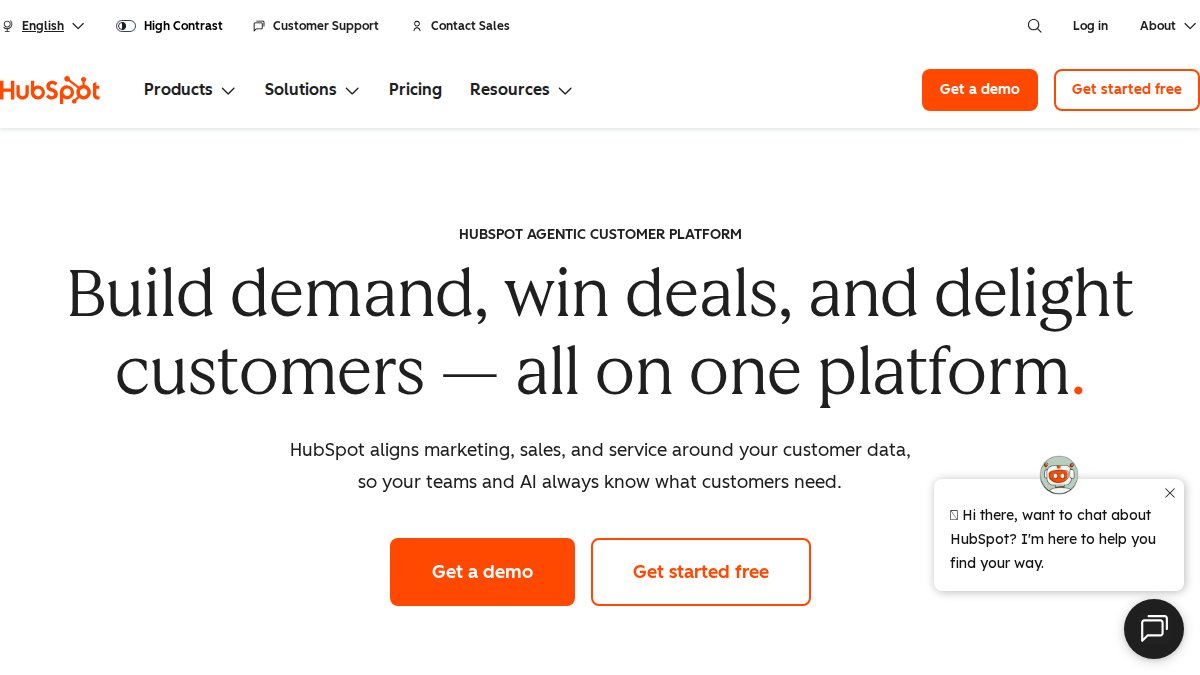
- HubSpot offers 30% recurring commissions for one year, best suited to business software audiences.
- ShareASale is a network, so commission rates and cookie duration vary by merchant.
- Compare programs by estimated earnings per click, not headline commission rate.
Table of Contents
- What Best Affiliate Programs Pricing and Benefits Actually Mean
- Affiliate Program Commission Rates: Flat Fees, Revenue Share, and Recurring Deals
- Highest-Paying Affiliate Programs: What the Numbers Really Show
- Best Affiliate Programs for Beginners: Low Risk, Clear Terms
- Constant Contact Affiliate Program: Up to $105 per Referral
- HubSpot Affiliate Program: 30% Recurring for One Year
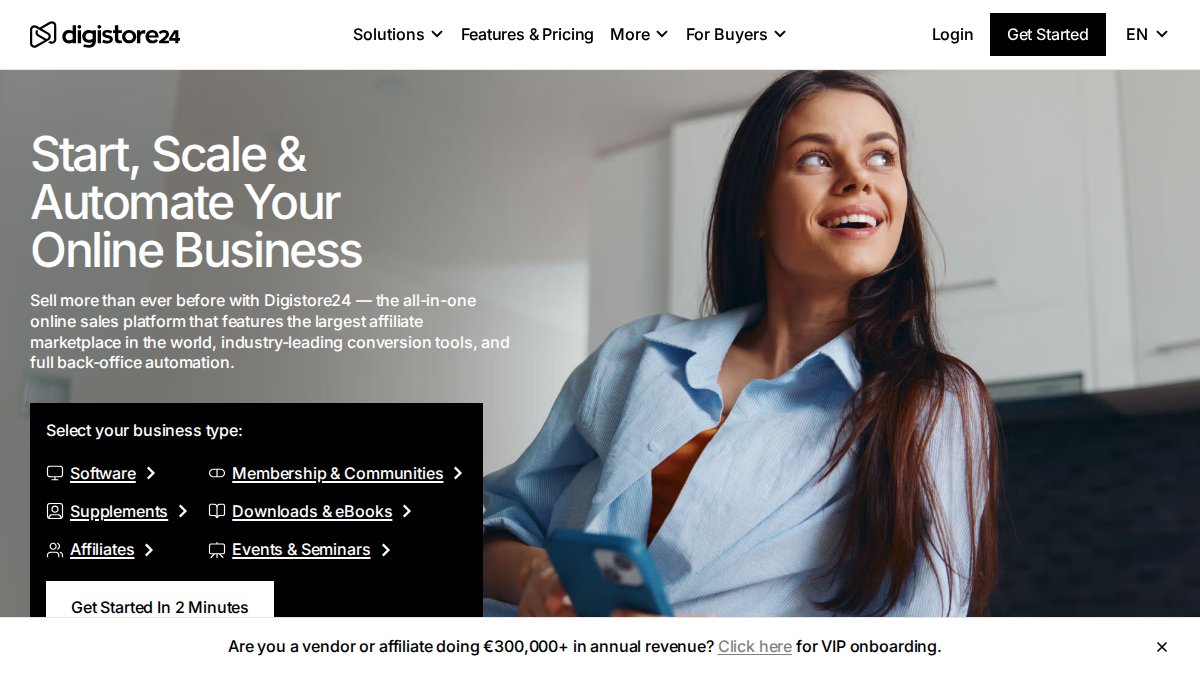
- Digistore24 and Semrush: Two Very Different Free-to-Join Options
- ShareASale Affiliate Program: What to Check Before You Join
- Cookie Duration, Payment Thresholds, and the Terms That Decide Your Real Payout
- Comparing Total Value: Net Earnings After Costs and Conversion Performance
- Frequently Asked Questions
What Best Affiliate Programs Pricing and Benefits Actually Mean
Affiliate programs pricing is the set of commission terms, payout thresholds, and attribution rules that decide what you actually earn per referral. Benefits are what you get beyond the headline rate: recurring commissions, free joining, ready-made marketing materials, and reliable tracking.
That distinction matters more than most roundups admit. A 30% commission means nothing if the cookie window expires before your reader buys. This guide from Affiliate Kelley’s Profit Review Hub breaks down what each term really costs you, which programs pay what, and where the fine print quietly shrinks your payout. Below, we compare six programs on the terms that decide real earnings, not just the numbers on the sales page.
Affiliate Program Commission Rates: Flat Fees, Revenue Share, and Recurring Deals
Commission structures come in three main forms. Flat-rate commissions pay a fixed amount per qualified referral. Revenue share pays a percentage of each sale. Recurring commissions pay you again each time a referred customer renews a subscription.
Each structure suits a different audience. Flat fees reward volume and work well for lead generation, where a simple sign-up or trial is the conversion. Revenue share pays more per sale but depends on average order value. Recurring deals build slowly and pay best when you promote subscription software to an audience that stays.

How to Read a Commission Rate Without Getting Fooled
A commission rate is only meaningful next to its conditions. Before you compare two programs, check four things:
- Commission duration: does it pay once, or for the life of the customer?
- Qualified referral definition: does a free trial count, or only a paid subscription?
- Attribution window: how long after your click does a sale still credit you?
- Refund and chargeback rules: can a commission be reversed after payout?
A high rate with a short cookie window and strict reversal terms often nets less than a modest rate with clean tracking. Many affiliates learn this the hard way after their first payout cycle.
Highest-Paying Affiliate Programs: What the Numbers Really Show
The highest headline rates often cluster around business software, where customer lifetime value can justify generous payouts.
Those numbers look strong until you apply them to a real funnel. A $105 flat fee requires a completed referral, not a click. A 30% recurring commission pays nothing if the customer cancels in month two. When you evaluate highest-paying affiliate programs, model earnings per click rather than commission per sale. If your content converts at a low rate, a big payout on paper still produces a small check.
If you want to browse programs you can actually join, our affiliate marketing product hub lists options by category and payout type.
Best Affiliate Programs for Beginners: Low Risk, Clear Terms
The best affiliate programs for beginners are free to join, pay reliably, and explain their terms in plain language. Upfront fees are the first red flag.
Beginners should also favor programs with a clear application process and generous marketing materials. You need banners, tracked links, and a dashboard that shows clicks and conversions without guesswork. Low risk means you can test a program for a month and walk away with no sunk cost.
A practical starting checklist:
- Confirm joining is free
- Read the payout threshold and schedule
- Check the cookie duration
- Verify the dashboard tracks clicks and sales
- Review promotional restrictions before writing content
Our curated list of affiliate marketing products is built for exactly this stage, so you can pick one program and start without overspending.
Constant Contact Affiliate Program: Up to $105 per Referral
Constant Contact’s affiliate program is one option to review, and its current terms are best checked directly with the program.
Best for: publishers whose audience already wants email marketing tools.
Skip if: you need verified cookie and payout terms before committing, because the available details do not specify them.
That gap is the honest limitation. A flat fee this size rewards volume, so it suits a list with steady sign-ups rather than one big launch.
HubSpot Affiliate Program: 30% Recurring for One Year
Recurring structures reward retention: the longer a referred customer stays, the more the referral is worth.
Check the program’s own terms for eligibility, cookie duration, and payout thresholds before joining. Content creators serving businesses that buy marketing, sales, or service software fit best here. If your audience is consumer-focused, the recurring model rarely pays off.
Digistore24 and Semrush: Two Very Different Free-to-Join Options
Digistore24 operates as a marketplace where you browse offers and promote what fits your audience. Single-brand programs are tied to one software product, which gives you a narrower but more focused offer.
The contrast is useful. A marketplace gives you variety and low commitment. A single-brand program gives you one product, deeper marketing materials, and a clearer audience fit. Neither model is better on its own; the question is whether you want to shop for offers or commit to one tool.
If you are weighing free-to-join options, our guide on growing your online business without extra costs covers how to build traffic before you pay for anything.
ShareASale Affiliate Program: What to Check Before You Join
The ShareASale affiliate program is a network, not a single merchant, so your terms depend on the merchant you pick inside it. That changes how you should evaluate it.
Check these before you apply:
- Merchant-level commission rates, which vary widely across the network
- Cookie duration, set per merchant rather than by the network
- Payment threshold and schedule, which affect when you see money
- Promotional restrictions, including trademark and bidding rules
- Reversal policy, since returns can claw back commissions
Networks make discovery easy and terms inconsistent. Treat every merchant inside ShareASale as its own program with its own fine print.
Cookie Duration, Payment Thresholds, and the Terms That Decide Your Real Payout
Cookie duration is the window during which a click still credits you with a sale. Payment thresholds are the minimum balance you must reach before a payout is released. Attribution rules decide which click gets credit when a buyer sees several affiliates before purchasing. Together these terms decide whether a strong commission rate ever reaches your bank account.
Most roundups list a cookie number and move on. That is not enough to compare programs, because the same 30-day cookie can behave very differently depending on the merchant’s attribution model, reversal policy, and payout schedule. The table below is the minimum set of terms you should record for every program before you promote it.
| Term | What It Controls | Why It Matters |
|---|---|---|
| Cookie duration | Credit for delayed purchases | Short windows lose slow-deciding buyers, especially in software with long trials |
| Attribution model | Which affiliate gets credit | Last-click favors closing content; first-click favors awareness content |
| Qualified sale rules | What counts as a conversion | Trials, free sign-ups, and self-referrals may not pay |
| Payment threshold | When you get paid | High thresholds delay cash flow when volume is low |
| Payout schedule | Frequency of payments | Monthly beats quarterly for testing and cash flow |
| Reversal policy | Refunded commissions | Returns and chargebacks can erase earned payouts after the fact |
| Payment methods | How money arrives | PayPal, bank transfer, and wire have different fees and delays |
| Promotional restrictions | How you may advertise | Trademark bidding and coupon rules can void commissions |
How attribution actually plays out. Attribution models vary, and the most common is last-click attribution, meaning the affiliate whose link was clicked most recently before purchase gets the commission. Confirm which model your program uses.
How thresholds and schedules interact. A $50 threshold with monthly payouts is very different from a $100 threshold with quarterly payouts, even at the same commission rate. At low volume, a high threshold can mean you wait months for a first payment, which makes it hard to tell whether a program is working.
How reversals shrink real payouts. Refunds, chargebacks, and cancelled subscriptions can reverse commissions after they are credited, and some programs claw back commissions after payout. Software with monthly subscriptions is especially exposed because a customer who cancels in month two may wipe out a recurring commission that looked generous on paper.
How to verify terms yourself. Open the program’s official terms or affiliate agreement, search for the words “cookie,” “attribution,” “threshold,” “reversal,” and “prohibited,” and record what you find with the date. If the terms page does not state a figure, treat it as unknown rather than assuming the number a review site quoted.
Watch out: a program that advertises a long cookie window but uses last-click attribution and a 90-day reversal window can pay you less than a program with a shorter cookie and cleaner terms, so compare the full set of terms rather than any single number.
Track these metrics in your affiliate dashboard so you can see which terms are actually costing you money:
| Metric | What It Reveals |
|---|---|
| Clicks | Traffic volume to your links |
| Conversion rate | How well your content matches buyer intent |
| Reversed commissions | How much refunds and cancellations cost you |
| Days to payout | How long cash is tied up |
| Effective payout per click | The number that actually compares programs |
Comparing Total Value: Net Earnings After Costs and Conversion Performance
Net earnings, not headline commissions, separate good programs from good marketing. Most roundups rank programs by commission rate and stop there. That ranking is misleading because a $105 flat fee and a 30% recurring commission are not comparable until you apply the same funnel assumptions to both.
The formula. Estimated earnings per click equals your conversion rate multiplied by the average payout per qualified sale, minus reversals, minus your cost per click. Written out:
- Estimate clicks per month from your content or ads.
- Multiply by your conversion rate to get qualified sales.
- Multiply by average payout per sale, adjusted for the share of commissions that get reversed.
- Subtract your costs, including paid traffic, tools, and the value of your time.
- Divide total net earnings by total clicks to get earnings per click.
A worked example using round numbers. Suppose two programs are on your shortlist. Program A pays a $100 flat fee per qualified sale and converts at 1%. Program B pays a 20% revenue share on an average order value of $200, which is $40 per sale, and converts at 4% because the product is cheaper and easier to try.
These numbers are illustrative, not predictions. The point is the method: plug in your own conversion rate and average order value, and the ranking of programs will often differ from the ranking by headline commission.
Why conversion rate matters more than commission rate. A program paying $105 per referral with a 0.5% conversion rate earns about $0.53 per click. A program paying $40 per sale with a 4% conversion rate earns $1.60 per click.
Why average order value changes revenue share math. A 20% revenue share on a $50 product pays $10 per sale. The same 20% on a $500 product pays $100. Revenue share programs therefore reward publishers whose audience buys higher-tier plans or bundles. If your content attracts buyers at the low end of a product line, a flat fee may beat a revenue share even when the percentage looks generous.
Why refund rate and reversals belong in the model. A program with a 20% refund rate effectively pays 80% of its advertised commission over time. High-ticket software and courses often carry higher refund rates than low-cost subscriptions, which can erase the advantage of a bigger headline payout.
Why recurring commissions need a retention assumption. A 30% recurring commission for one year is not worth 30% of annual revenue unless the customer stays. If half of referred customers cancel within three months, the effective payout is closer to 30% of a quarter’s revenue plus a fraction of the remainder.
A standardized comparison table. Use the same columns for every program so the comparison is consistent. The columns below are the ones that change the ranking most often.
| Column | What to Record |
|---|---|
| Commission type | Flat fee, revenue share, or recurring |
| Headline payout | Dollar amount or percentage, with currency |
| Qualifying action | Trial, paid subscription, or purchase |
| Average order value | The typical purchase your audience makes |
| Conversion rate | Your own measured rate, not the program’s claim |
| Reversal rate | Share of commissions refunded or clawed back |
| Cookie and attribution | Window and model, verified from official terms |
| Payout threshold and schedule | Minimum balance and payment frequency |
| Estimated earnings per click | The output of the formula above |
Because payouts depend on conversions, the content you publish matters as much as the program you pick. A program with clean terms still earns nothing if your content attracts readers who never buy. Our guide on creating content that converts for affiliate sales covers the practical side of matching content format to buyer intent.
For a plain-language primer before you commit, read what affiliate marketing is and how it works.
Watch out: modeling earnings per click with a conversion rate borrowed from a program’s marketing page rather than your own dashboard will overstate results, so use your measured numbers once you have them and treat early estimates as provisional.
Frequently Asked Questions
What is the highest-paying affiliate program?
There is no single highest payer, because payout depends on the product price and the commission structure. Recurring and per-referral structures can each pay well depending on the product and the customer. A recurring rate on a subscription can out-earn a larger one-time fee if the customer stays. Compare the commission rate, the average order value, and how long the commission lasts before deciding which one pays best for your audience.
Which affiliate programs are best for beginners?
Start with programs that cost nothing to join and have simple terms. Digistore24 is free to join as an affiliate and lets you browse offers in a marketplace, which suits people still learning what sells. Constant Contact is also free to join and pays a defined referral amount. Beginners should favor clear payout terms over the biggest headline rate, then check the cookie duration and payment threshold before promoting anything.
Do affiliate programs charge a fee to join?
The programs in this comparison do not charge affiliates a joining fee. Constant Contact and Digistore24 are both reported as free to join, and HubSpot and Semrush operate commission-based affiliate programs. What you pay for is the product the customer buys, not your participation. Always confirm the current terms on the program’s own page, since eligibility requirements and application processes can change between sign-ups.
How do affiliate programs calculate commissions?
Most use one of three structures: a flat fee per qualified sale, a percentage of the sale value, or a recurring share of a subscription for a set period. A recurring share of a subscription for a set period is an example of the third. Your payout is usually based on the net sale after refunds and chargebacks, so a high refund rate reduces what you actually receive. Read the program terms to see which structure applies and when a sale counts as qualified.
What should you compare when choosing an affiliate program?
Compare five things: the commission rate and structure, the cookie duration and attribution window, the payment threshold and schedule, the refund and chargeback policy, and whether the product fits your audience. A 30% recurring rate with a short cookie window can pay less than a smaller flat fee with a long one. Also check the marketing materials and promotional restrictions so your content stays compliant with the program terms.







0 Comments