

Last Updated: November 15, 2026
Quick Summary
The best high commission affiliate programs pair a strong rate with a product your audience wants and tracking that credits you fairly. Compare earnings per click, cookie duration and payout threshold, not the headline percentage alone. Start with one program matched to your audience.
- A high commission affiliate program with a short cookie window can lose sales to competitors who close later.
- Beginners should pick one program and one traffic source for their first 90 days.
- High-ticket conversions are rarer and slower, so longer attribution windows can be worth more.
- At 1,000 visitors, a 1% click-through rate and 2% conversion rate yields about 0.2 sales.
- Diversify across two or three programs so one policy change does not wipe your income.
Table of Contents
- Why High Commission Rates Alone Don’t Make a Program Worth Joining
- How We Compared These High Commission Affiliate Programs
- Quick Comparison: Payouts, Cookie Windows, and Best-Fit Audiences
- The Best High Commission Affiliate Programs for Beginners
- Top High-Ticket Affiliate Programs with the Largest Single Payouts
- Affiliate Programs That Pay Per Click: When Traffic Beats Conversions
- Recurring Affiliate Programs That Keep Paying Month After Month
- Realistic Earnings Scenarios: What 1,000 Visitors Actually Pays
- Program Risks, Policy Traps, and the Disclosure Rules You Must Follow
- Pick Your First Program and Start Earning
- Frequently Asked Questions
Why High Commission Rates Alone Don’t Make a Program Worth Joining
A 50% commission on a product nobody buys pays you nothing. That is the uncomfortable truth behind most “best high commission affiliate programs” lists, and it is where we start at Affiliate Kelley’s Profit Review Hub.
The high commission affiliate model rewards you on paper, but the real payout depends on three things working together: a commission rate you can actually collect, a product your audience already wants, and a tracking system that credits you fairly. Miss any one of those and the percentage is decoration.
Below, we explain how to compare these programs and the numbers that separate a real opportunity from a marketing brochure.
How We Compared These High Commission Affiliate Programs
Commission rate alone is a poor guide. A program with a modest rate and a generous attribution window can be worth more than one with a flashy headline figure.
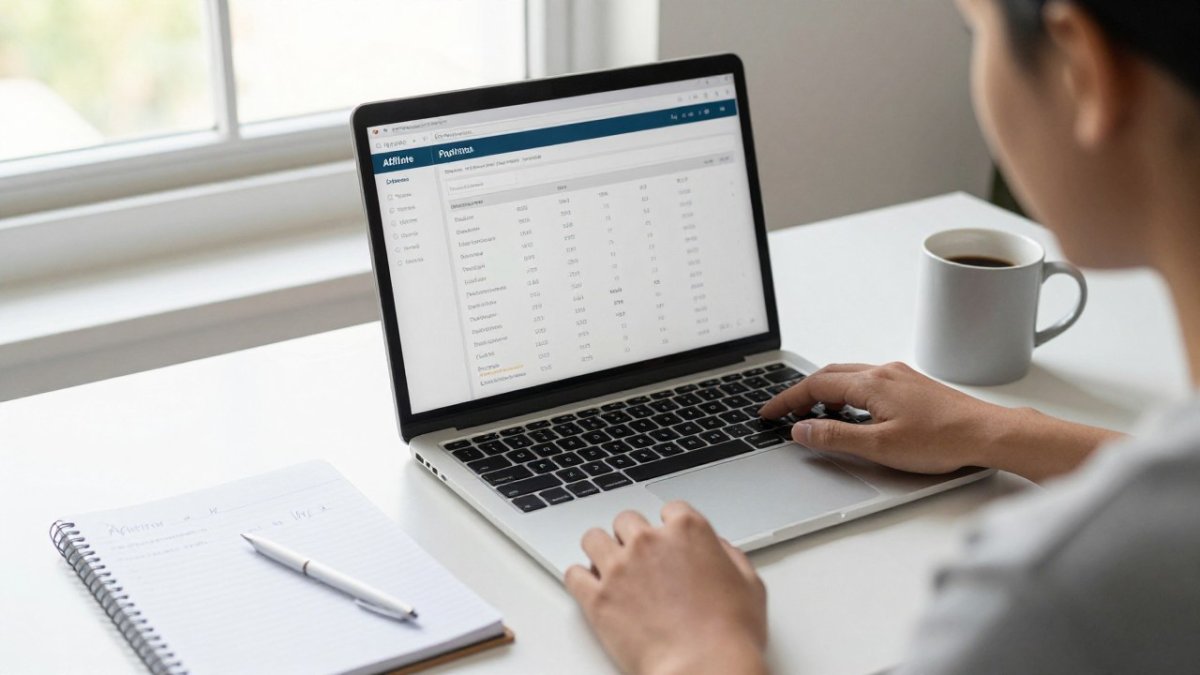
A common mistake is judging a program by its commission rate alone. Payout thresholds, refund policies, and cookie duration often decide whether you ever see the money.
The Three Numbers That Decide Real Earnings
Earnings per click is the metric that matters most. It combines your commission rate, the product’s conversion rate, and your average order value into one figure.
- Commission rate: the percentage or flat fee you earn per sale.
- Cookie duration: how long after a click you still get credit, often called the attribution window.
- Payout threshold: the minimum balance before the program pays out.
A high commission affiliate program with a short cookie window loses sales to competitors who close the deal later. Track all three before you join.
Quick Comparison: Payouts, Cookie Windows, and Best-Fit Audiences
Here is the at-a-glance view. Terms change often, so confirm current figures on each program’s official page before you commit.
| Program | Reported Payout | Model | Best-Fit Audience |
|---|---|---|---|
| Affiliate Kelley’s Profit Review Hub | Bonus offers + guides | Review hub | Beginners wanting unfiltered reviews |
| Digistore24 | Up to $150 per referral | Marketplace | Affiliates wanting many offers |
| Shopify | Up to $150 or revenue share | Referral | Ecommerce-focused audiences |
| Semrush | Not stated in our sources | Recurring | SEO and marketing publishers |
| HubSpot | Not stated in our sources | Recurring | B2B and sales audiences |
| Leadpages | Not stated in our sources | Recurring | Creators building funnels |
| Constant Contact | Not stated in our sources | Recurring | Small-business audiences |
| Moosend | Not stated in our sources | Recurring | Email marketing content |
| Brand24 | Not stated in our sources | Recurring | Brand-monitoring audiences |
| Woorise | Not stated in our sources | Recurring | Marketing software audiences |
Before you join any program, read the affiliate marketing basics so you understand how tracking and commissions actually work.
The Best High Commission Affiliate Programs for Beginners
Start with programs that approve new publishers and pay reliably. Affiliate Kelley’s Profit Review Hub is built for people who are new to this and want unfiltered reviews.
1. Affiliate Kelley’s Profit Review Hub is built for beginners. It offers fair and unfiltered reviews, deep-dive product insights, and ready-to-use plans personalized to fit you. Special bonus offers are also available.
Low-Barrier Programs Worth Your First 90 Days
For your first 90 days, pick one program and one traffic source. Beginners who spread across several programs struggle to learn what converts. Publish consistently, and track your click-through rate before adding a second offer.
Top High-Ticket Affiliate Programs with the Largest Single Payouts
The largest single payouts come from software, ecommerce platforms, and B2B tools, where one conversion can be worth more than dozens of low-ticket sales. But high-ticket programs reward quality traffic, not volume, and the terms behind the headline payout decide whether you ever collect. Here is a normalized view of the programs that appear most often in high-ticket roundups, with the terms that actually matter.
Normalized Comparison: Terms That Decide Real Payout
| Program | Reported Payout | Model | Typical Cookie Window | Payout Threshold | Best-Fit Audience |
|---|---|---|---|---|---|
| Shopify | Up to $150 or revenue share per referral | Referral / revenue share | 30 days (verify current terms) | Varies by region | Ecommerce and store-launch content |
| Semrush | Recurring revenue share (rate not stated in our sources) | Recurring | 30-120 days depending on program tier | Varies | SEO and marketing publishers |
| HubSpot | Recurring revenue share (rate not stated in our sources) | Recurring | 30-180 days depending on program tier | Varies | B2B and sales audiences |
| Digistore24 | Up to $150 per referral | Marketplace | Set by individual vendors | Set by vendor | Affiliates wanting many offers |
Terms change often, so confirm current figures on each program’s official page before you commit.
Why High-Ticket Offers Convert Differently
High-ticket conversions are rarer and slower. A reader researching a software platform may take several visits before deciding, and trial periods can run for weeks before a paid subscription begins. That means your content needs to build trust across several touchpoints, a review, a comparison, a use-case walkthrough, rather than a single post.
The practical implication is that a 30-day cookie window can expire before a slow B2B buyer converts. Programs with longer attribution windows can be worth more to high-ticket publishers even at a lower headline rate, because you are credited for sales you influenced.
The Economics: One Sale vs. Many
A high-ticket referral can be worth many times a low-ticket sale, but its conversion rate is usually lower, so the comparison is not as simple as the payout figure suggests. Model it with your own traffic and conversion numbers before choosing an offer.
Watch out: many programs void commissions on refunded or cancelled subscriptions, so check the reversal policy before you build a content plan around a single offer.
Matching High-Ticket Offers to Your Niche
- Ecommerce and store-launch content: Shopify-style referral offers fit audiences actively comparing platforms.
- SEO and marketing publishers: Semrush and similar tools fit readers searching for keyword research, backlink, or content-planning solutions.
- B2B and sales audiences: HubSpot-style offers fit readers evaluating CRMs, marketing automation, or sales pipelines.
Choose the offer your audience is already searching for, then confirm the commission rate, cookie window, and payout threshold on the official page. For a deeper look at how recurring structures change the math, read are recurring commission affiliate programs worth it.
Affiliate Programs That Pay Per Click: When Traffic Beats Conversions
Pay-per-click affiliate programs pay you for the click or the lead rather than the closed sale. That distinction changes what “high commission” means, since a per-click offer can out-earn a percentage commission if traffic clicks but rarely buys.
Three Payout Models That Get Confused
- Pay-per-click (PPC): you earn a fixed amount each time a visitor clicks your tracked link, regardless of whether they buy. Common in display and native ad networks, less common in SaaS affiliate programs.
- Cost-per-lead (CPL): you earn when a referred visitor completes a form, trial signup, or demo request.
- Cost-per-action (CPA): you earn on a defined action such as a paid subscription start or a verified account, which sits between a lead and a full sale.
Some software programs advertise recurring revenue share but pay differently in practice. Read the commission schedule, not the headline.
When Click- and Lead-Based Models Beat Commission-Per-Sale
Pay-per-click and CPL models suit publishers whose traffic is large but slow to convert: comparison pages, coupon-style roundups, and broad informational content. If your site gets steady traffic but few buyers, a $1-$3 click payout can beat a 30% commission on a product nobody purchases.
The tradeoff is volume dependence. Per-click payouts are paid whether or not the visitor buys, which can reduce variance compared with commission-per-sale offers. If your traffic is small and highly targeted, commission-per-sale offers usually pay more per visitor.
What to Verify Before Joining a Click- or Lead-Based Program
- Payout per action and action definition: confirm whether a “lead” means a free trial signup, a verified email, or a sales-qualified demo. The stricter the definition, the lower your effective payout.
- Attribution window: click-based programs often use short windows (24-30 days is common), so late conversions may not credit you.
- Reversal and fraud rules: leads can be reversed for duplicate signups, invalid emails, or non-payment, which quietly cuts your earnings.
- Payout threshold and schedule: a $50 threshold with monthly net-30 payment is workable; a $500 threshold on a low-volume site is not.
Watch out: some programs advertise “pay per click” but only pay on verified conversions, so read the commission terms before you build content around the offer. For a broader grounding in how tracking and attribution work, revisit our affiliate marketing basics.
Matching the Model to Your Audience
Use click- and lead-based offers when your audience is in research mode and unlikely to buy on the first visit, for example, small-business owners comparing email tools. Use commission-per-sale offers when your content is bottom-of-funnel and your readers arrive ready to purchase. The right model is the one that matches your audience’s intent, not the one with the biggest number on the program page.
Recurring Affiliate Programs That Keep Paying Month After Month
Recurring programs pay you a share every month a referred customer stays subscribed, which turns one sale into ongoing income. Software subscriptions dominate this category because customers renew automatically.
The advantage is compounding: a referral from January still pays in December. The risk is churn, since you lose the commission when the customer cancels.
For a deeper look at whether these structures pay off, read are recurring commission affiliate programs worth it.
Realistic Earnings Scenarios: What 1,000 Visitors Actually Pays
Here is a simple framework using illustrative assumptions, not guarantees.
Assume 1,000 visitors, a 1% click-through rate to your affiliate link, and a 2% conversion rate on those clicks. That is 10 clicks and roughly 0.2 sales. At a $100 commission, that is about $20 per 1,000 visitors.
| Visitors | Clicks (1% CTR) | Sales (2% conv.) | At $50 | At $150 |
|---|---|---|---|---|
| 1,000 | 10 | 0.2 | $10 | $30 |
| 5,000 | 50 | 1 | $50 | $150 |
| 10,000 | 100 | 2 | $100 | $300 |
These are illustrations, not promises. Improve your conversion rate and the same traffic pays more. Learn how to create content that converts for affiliate sales, and check our earnings disclaimer for how we frame income expectations.
Program Risks, Policy Traps, and the Disclosure Rules You Must Follow
The biggest risk is a program changing its terms after you have built traffic around it. Commission cuts, shortened cookie windows, and sudden account closures happen. Diversify across two or three programs so one policy change does not wipe your income.
Disclosure is not optional. Regulators require you to state clearly that you earn commissions from links you share. Skipping it can cost you your account and your audience’s trust. See our own affiliate disclosure as a working example of how to phrase it.
Watch out: many programs void commissions on refunded sales, so a high rate on a product with heavy refunds can pay less than a modest rate on a stable one.
Pick Your First Program and Start Earning
Choose one program this week, not five. Match it to an audience you can actually reach, confirm the commission rate, cookie window, and payout threshold on the official page, and publish your first piece of content. Then measure earnings per click before you scale.
At Affiliate Kelley’s Profit Review Hub, we aim to make that first decision easier. You get fair and unfiltered reviews, deep-dive product insights, ready-to-use plans personalized to fit you, and special bonus offers.
Get started with Affiliate Kelley’s Profit Review Hub and pick your first high commission affiliate program with a clear plan behind it.
The programs are there. The math is simple. What separates earners from browsers is starting with one offer and one audience today.
Frequently Asked Questions
Which affiliate programs pay the highest commissions?
Payout size depends on the product price and the commission structure. Software and high-ticket digital product programs can offer larger per-referral payouts than low-ticket offers. High-ticket digital products and business software tend to produce the largest single payouts because the sale value is higher. Always confirm the current rate on the program’s official page before you build content around it, since terms change.
What should I check before joining a high-paying affiliate program?
Look at four things before you join: the commission rate, the cookie duration or attribution window, the payout threshold and schedule, and the approval process. A 40% commission with a 7-day cookie can pay less than a 20% commission with a 90-day cookie if your audience takes time to buy. Also read the program’s promotional rules, since some ban coupon sites or paid search on brand terms.
How do recurring commissions compare with one-time affiliate payouts?
Recurring affiliate programs pay you a share of each subscription renewal, so a single referral can earn for years. One-time payouts are larger per sale but stop there. If your audience stays on a tool for two or three years, a smaller recurring rate often beats a big one-time bounty. Software and email marketing programs are the most common source of recurring revenue share.
Can beginners join high-commission affiliate programs without a website?
Many programs accept applicants without a live site, but approval is easier once you can show where you will promote the offer. Start with programs that have simple application forms, then build a simple review page or email list around one product. Beginner-friendly options include marketplace programs where you can pick offers after approval, rather than applying to each merchant separately.
Which affiliate niche is most profitable for high commissions?
Business and marketing software consistently offers high payouts and recurring terms because the products cost more and customers stay subscribed. Ecommerce platforms, email marketing tools, and SEO software all sit in this group. The most profitable niche for you is the one your audience already trusts you in, since a high commission on a product your readers never buy earns nothing.







0 Comments